
In the traditional, linguistic sense, a maxim is a short saying, phrase, or proverb that is typically based in truth or wisdom. Here however, maxims are to be used in a method based on that of the maxims of philosopher François de La Rochefoucauld.
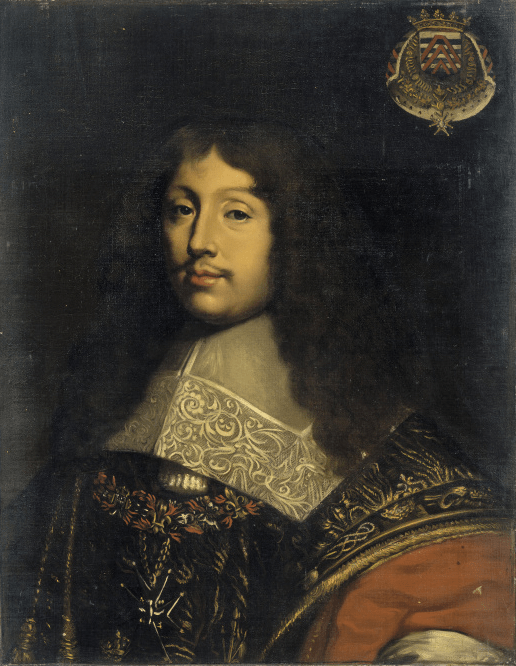
Rochefoucauld based much of his attitude towards philosophy on the idea that it should be open and available to many. In other words, Rochefoucauld desired to do away with the jargon and complicated terms that otherwise gatekept people from participating in philosophy.
So how was this achieved? Well, Rochefoucauld arrived at his ideas by many ways, typically by hosting salons and forums. No matter the size or a complexity of an idea, he (and his interlocutors,) attempted to distill each idea down to its simplest form. In doing so, they would reduce the maxim to a sentence or two at most, and keep the complicated vocabulary to a minimum.
As an example, let’s look at a few of the maxims from “Reflections; or sentences and Moral Maxims.”
Maxim 31 reads: “If we had no faults we should not take so much pleasure in noting those of others.”
Maxim 39 reads: “Interest speaks all sorts of tongues and plays all sorts of characters; even that of disinterestedness.”
Maxim 70 reads: “There is no disguise which can long hide love where it exists, nor feign it where it does not.”
Maxim 84 reads: “It is more disgraceful to distrust than to be deceived by our friends.”
Maxim 101 reads: “Ideas often flash across our minds more complete than we could make them after much labour.”
This is all to say that for the context of maxims as they will be referred to here, they will not all be based in the so-called “capital-t” truth. Rather, maxims belong to a series of ephemeral truths; those which belong to perspective more than some empirical, inarguable fact. A maxim is arguable, and meant to provoke thought.
As point of fact, dear reader, I myself disagree with much that Rochefoucauld has written, and would happily argue against him. This does not mean that the framework of his ideas, or rather, the methods that he uses to arrive at maxims, is flawed. Quite the opposite. The methodology he uses to simplify his ideas is exemplary. Though jargon, without doubt, has a place in specialized fields of thought and practicality, it is not suitable for beginners. So, to make philosophy, and indeed any type of thought more accessible to beginners, it is advisable to use Rochefoucauld’s maxims.
To end, let us look at Maxim 199, which helps capture the spirit of simplicity desired here. It reads: “The desire to appear clever often prevents our being so.”
Reflections; or sentences and Moral Maxims can be found for free online. https://www.gutenberg.org/files/9105/9105-h/9105-h.htm


Leave a Reply